Learning & Beyond
iPrimary Curriculum
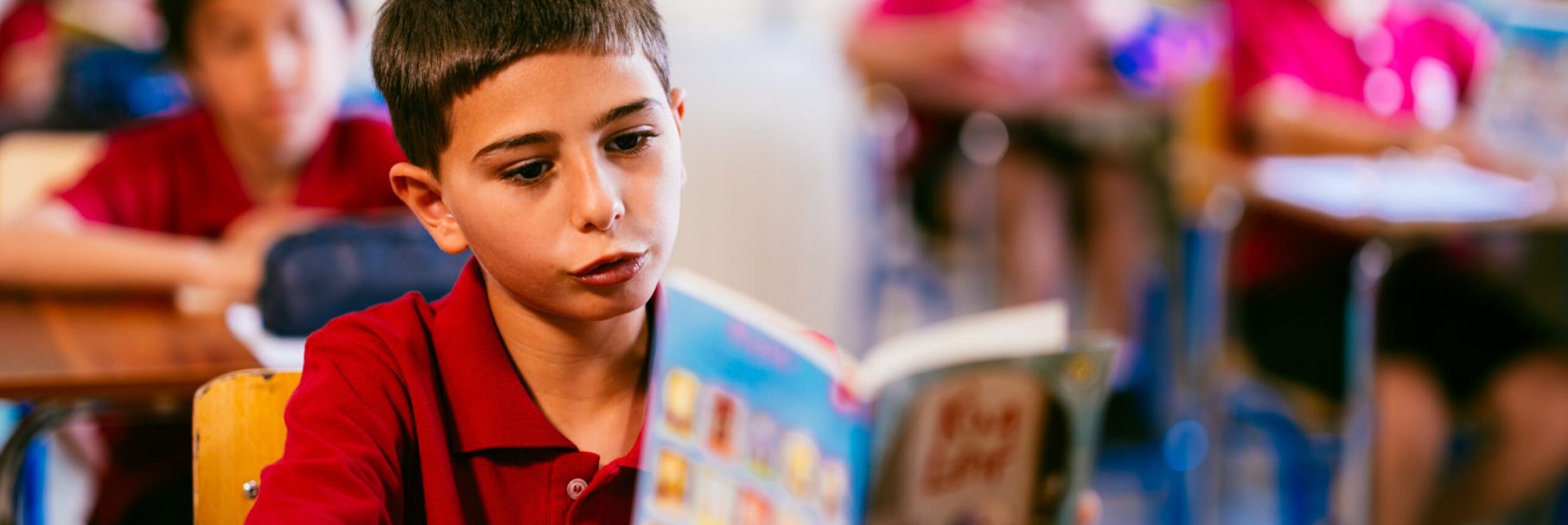
Helping young learners start out on their learning journey is a key moment in their schooling.
The Grammar Junior School has partnered with Pearson and offers the Edexcel iPrimary curriculum. The iPrimary curriculum is a complete teaching and learning programme for use in International primary schools.
Emphasis is placed on learning the content, deep learning, communication, critical and creative thinking, and collaboration. iPrimary offers a compelling opportunity to provide our students with a high-quality, internationally recognized, and engaging education.
It lays a solid foundation for their future academic success and prepares them to become responsible global citizens.
The curriculum is:
- Rigorous & internationally benchmarked
- Engaging & flexible
- Inquiry-based learning
It offers:
- Internal progress tests & external achievement tests
- Smooth transition & progression towards International GCSEs & beyond.
iPrimary Curriculum Subjects
Core:
English
Aims:
Build strong foundations in reading, writing, speaking, and listening. Encourage fluent communication and accurate language use.
Key Areas:
- Phonics and Early Reading (Years 1–2): blending, decoding, sight words
- Reading Comprehension: understanding fiction, non-fiction, poetry
- Spelling, Punctuation, Grammar (SPaG): progressively introduced and assessed
- Writing: imaginative, narrative, persuasive, instructional, descriptive
- Speaking & Listening: presentations, discussions, storytelling
- Assessment: formative classroom assessment + iPrimary Progress Tests (optional)
Science
Aims:
Develop fluency in number, understanding of mathematical structures, and confidence in problem-solving.
Key Areas:
- Number: counting, place value, operations (addition, subtraction, multiplication, division)
- Fractions, decimals, percentages: introduced progressively from Year 2 onward
- Measurement: time, length, mass, money, temperature
- Geometry: 2D and 3D shapes, symmetry, angles, position and direction
- Statistics: bar charts, tables, pictograms (introduced in later years)
- Reasoning and problem-solving: embedded across all strands
Mathematics
Aims:
Promote curiosity, scientific thinking, and understanding of the natural and physical world.
Key Areas:
- Biology: animals, humans, plants, life cycles, habitats, nutrition
- Chemistry: materials, states of matter, changes and properties
- Physics: light, sound, forces, electricity, magnetism
- Working Scientifically: asking questions, fair testing, recording data, drawing conclusions
- Assessment: regular inquiry-based projects + iPrimary Progress Tests (optional)
Computing
Aims:
Equip students with computational thinking and digital literacy skills.
Key Areas:
- Basic computer operations and typing
- Coding and programming: starting with block-based (e.g., Scratch), simple sequences
- Online safety and responsible use
- Using digital tools: word processing, presentations, media
- Problem-solving technology
Global Citizenship
Aims:
Develop students’ understanding of themselves, their communities, and the wider world.
Key Areas:
- Personal Identity and Values
- Rules, Rights and Responsibilities
- Diversity and Inclusion
- Environment and Sustainability
- Global Connections and Current Issues
- Approach: Reflective discussions, role play, collaborative projects
Other Subjects:
Music
Children are taught to:
- Experiment with, and create music
- Play musical instruments
- Use their voices expressively by singing songs and nursery rhymes
- Listen with concentration to recorded music and understanding to a range of high-quality live and recorded music
Physical Education
Basic fitness skills are built through positive, play-based activities that encourage movement and confidence.
- Pupils are introduced to sports such as basketball, baseball, and shot put using age-appropriate equipment.
- Coordination skills are strengthened through activities like long jump and hurdles.
- Balancing skills are developed by practising on a low balance bar and through wall climbing.
- Pupils become familiar with swimming through fun water games, helping them feel confident and comfortable in the pool.
Geography
Aims:
Broader understanding of the world around them, giving them insight into our rapidly changing world, allowing them to discover places near and far, as well as appreciating how they can contribute towards being a successful citizen.
- Atlas and Map Skills
- Cartographic Skills
- Investigative Skills
- Graphical Skills
Art
Our school sees Art as a cross curricular dimension. In our Pre-school class children have art lessons daily.
Children are presented with opportunities to explore, create and express themselves in the areas of painting, printing, drawing, collage and modelling using clay. They are encouraged to
work independently and in small groups using a variety of materials.
Children are supported and guided by an adult but are we never diminish their creativity by
telling them what to do.
Children are taught:
- to use a range of materials creatively to design and make products
- to use drawing, painting and sculpture to develop and share their ideas, experiences and imagination
- to develop a wide range of art and design techniques in using colour, pattern, texture, line, shape, form and space.
History
Aims:
Critical information linked to a specific focus on people/place/time of event. Ideas and themes such as settlement, trade or power that run through different studies. Chronological knowledge and understanding. Similarities and differences, Characteristic features, Cause and consequence, Significance, Historical interpretation, Select and interrogate historical sources.
Present understanding in a variety of ways.
- Ancient Egypt
- Cyprus History, Ancient Greeks
- Cyprus History, Tudors and Stuarts
- Cyprus History, World War I, II